
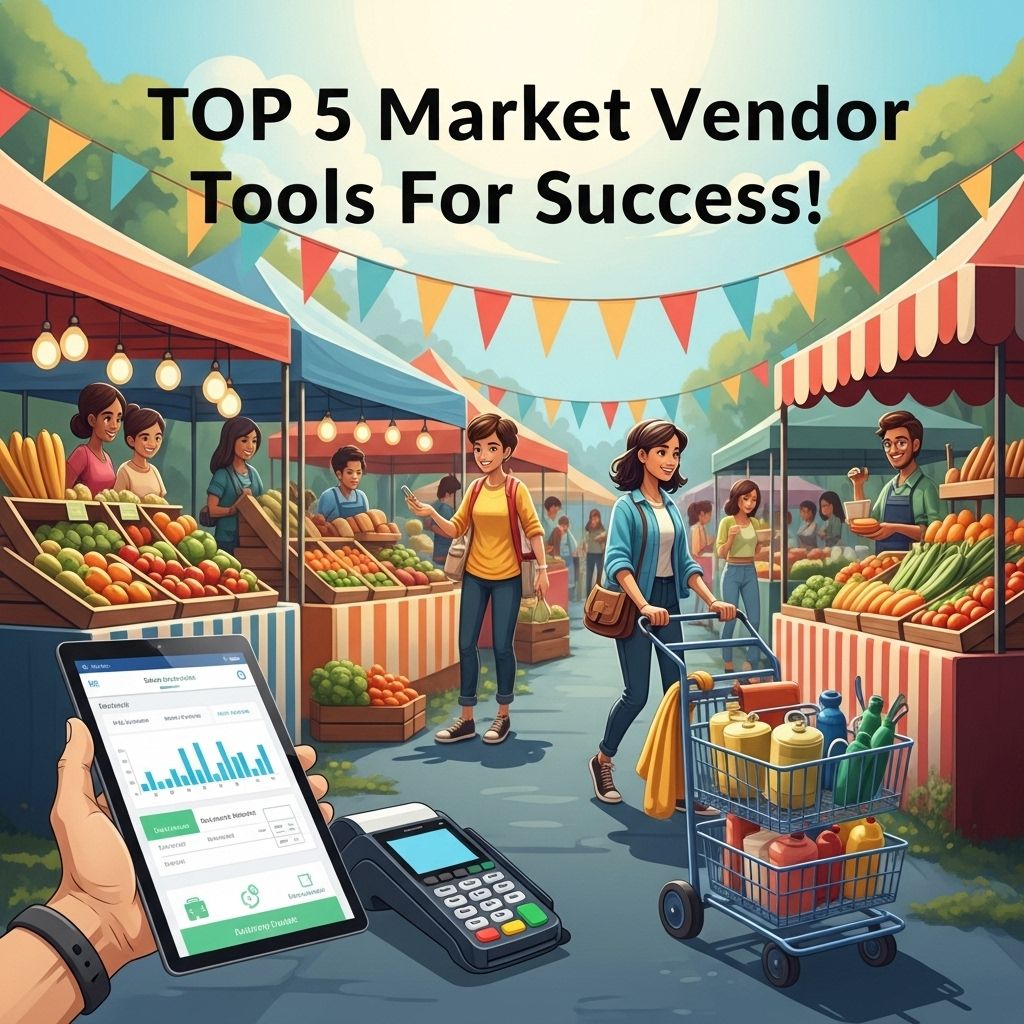

In today’s competitive landscape, market vendors must leverage the right tools to succeed. The rapid pace of technological advancements mandates that vendors adopt efficient solutions that enhance productivity, streamline operations, and ultimately drive sales. Whether you’re a seasoned market vendor or just starting out, selecting the right tools can significantly impact your business growth and customer engagement. In this article, we will explore five of the most effective tools that can help market vendors thrive in their respective niches.
1. Point of Sale (POS) Systems
A modern POS system is essential for any market vendor. Gone are the days of relying solely on cash registers and manual transaction logs. A comprehensive POS system provides numerous benefits for businesses of all sizes:
- Sales Tracking: Monitor sales in real-time, analyze trends, and make informed inventory decisions.
- Customer Management: Store customer information, track purchase history, and build loyalty programs.
- Payment Processing: Accept various payment methods, from credit cards to mobile wallets.
- Reporting: Generate detailed reports on sales performance, employee productivity, and more.
Recommended POS Systems
| POS System | Key Features | Pricing |
|---|---|---|
| Square | Easy setup, flat-rate fees, and no monthly charge. | Free for basic features |
| Shopify POS | Great for e-commerce integration, inventory management. | Starts at $29/month |
| Lightspeed | Excellent for inventory-heavy businesses, advanced reporting. | Starts at $69/month |
2. Inventory Management Solutions
Efficient inventory management is crucial for market vendors to avoid stockouts or overstock situations. An effective inventory management tool helps maintain the right levels of stock and manage suppliers.
Features to Look For
- Real-Time Inventory Tracking: Know your stock levels at any time.
- Supplier Management: Keep track of supplier contracts and order history.
- Automated Restocking: Set triggers for low stock to reorder automatically.
Popular Inventory Management Tools
| Tool | Advantages | Starting Price |
|---|---|---|
| TradeGecko | Intuitive interface, integrates with e-commerce platforms. | Starts at $39/month |
| Zoho Inventory | Affordability and a wide range of features. | Free for up to 20 orders/month |
| NetSuite | Comprehensive ERP system that includes inventory management. | Custom pricing |
3. Marketing Automation Tools
Effective marketing is key to attracting and retaining customers, and marketing automation tools can simplify this process. These tools help market vendors implement and manage marketing campaigns, track customer engagement, and analyze results.
Benefits of Marketing Automation
- Time Savings: Automate repetitive tasks such as email marketing and social media posting.
- Increased Engagement: Personalize marketing messages based on customer behavior.
- Analytics and Reporting: Measure campaign performance and ROI effectively.
Top Marketing Automation Tools
| Tool | Features | Pricing |
|---|---|---|
| Mailchimp | Email marketing, landing pages, and audience management. | Free tier available |
| HubSpot | Comprehensive CRM integrated with marketing functionalities. | Free tier available, paid plans start at $45/month |
| ActiveCampaign | Email marketing and CRM capabilities focused on automation. | Starts at $15/month |
4. Customer Relationship Management (CRM) Software
Building strong relationships with customers is vital for any market vendor. A good CRM system manages all customer interactions, ensuring no opportunities for engagement are missed.
Key CRM Features
- Contact Management: Store detailed customer profiles and interactions.
- Sales Pipeline Management: Track leads from initial contact to conversion.
- Task Automation: Automate follow-up tasks and reminders.
Most Recommended CRMs
| CRM | Strengths | Starting Price |
|---|---|---|
| Salesforce | Highly customizable, extensive features. | Starts at $25/user/month |
| Zoho CRM | Cost-effective with a comprehensive feature set. | Free tier available, $12/user/month for paid |
| HubSpot CRM | No cost for basic features, easy to use. | Free, with premium features available |
5. eCommerce Platforms
For vendors looking to expand their reach, having an online store is essential. eCommerce platforms allow market vendors to sell products online, providing access to a global customer base.
eCommerce Platform Features
- User-Friendly Interface: Easy for vendors to set up and manage their online store.
- Payment Integration: Support for multiple payment gateways.
- Inventory Synchronization: Keep online and offline inventory in sync.
Best eCommerce Platforms
| Platform | Features | Pricing |
|---|---|---|
| Shopify | Powerful selling tools, a vast app store. | Starts at $29/month |
| BigCommerce | Scalable solution for fast-growing businesses. | Starts at $29.95/month |
| WooCommerce | Customizable, open-source plugin for WordPress. | Free, hosting costs vary |
Conclusion
Utilizing the right tools can set market vendors on a path to success. A combination of solid POS systems, efficient inventory management, powerful marketing automation, effective CRM systems, and robust eCommerce platforms equips vendors to meet the demands of today’s market. By investing in these tools, vendors not only streamline their processes but also enhance customer interactions and drive sales. In an ever-evolving landscape, staying ahead with technology is paramount for sustained growth and success.
FAQ
What are the top market vendor tools for success?
The top market vendor tools include inventory management software, sales analytics platforms, customer relationship management (CRM) systems, mobile payment solutions, and social media marketing tools.
How can inventory management software help market vendors?
Inventory management software helps market vendors track stock levels, manage orders, and forecast demand, ensuring they always have the right products available.
Why is sales analytics important for market vendors?
Sales analytics provides insights into sales trends, customer preferences, and performance metrics, allowing vendors to make informed decisions to boost revenue.
What role does a CRM system play in vendor success?
A CRM system helps market vendors manage customer relationships, track interactions, and personalize marketing efforts, leading to improved customer satisfaction and loyalty.
How do mobile payment solutions benefit market vendors?
Mobile payment solutions enable market vendors to accept payments easily and securely from customers, enhancing the buying experience and increasing sales.
What social media marketing tools should vendors consider?
Vendors should consider tools like Hootsuite, Buffer, and Canva to manage social media presence, create engaging content, and analyze audience engagement effectively.


