
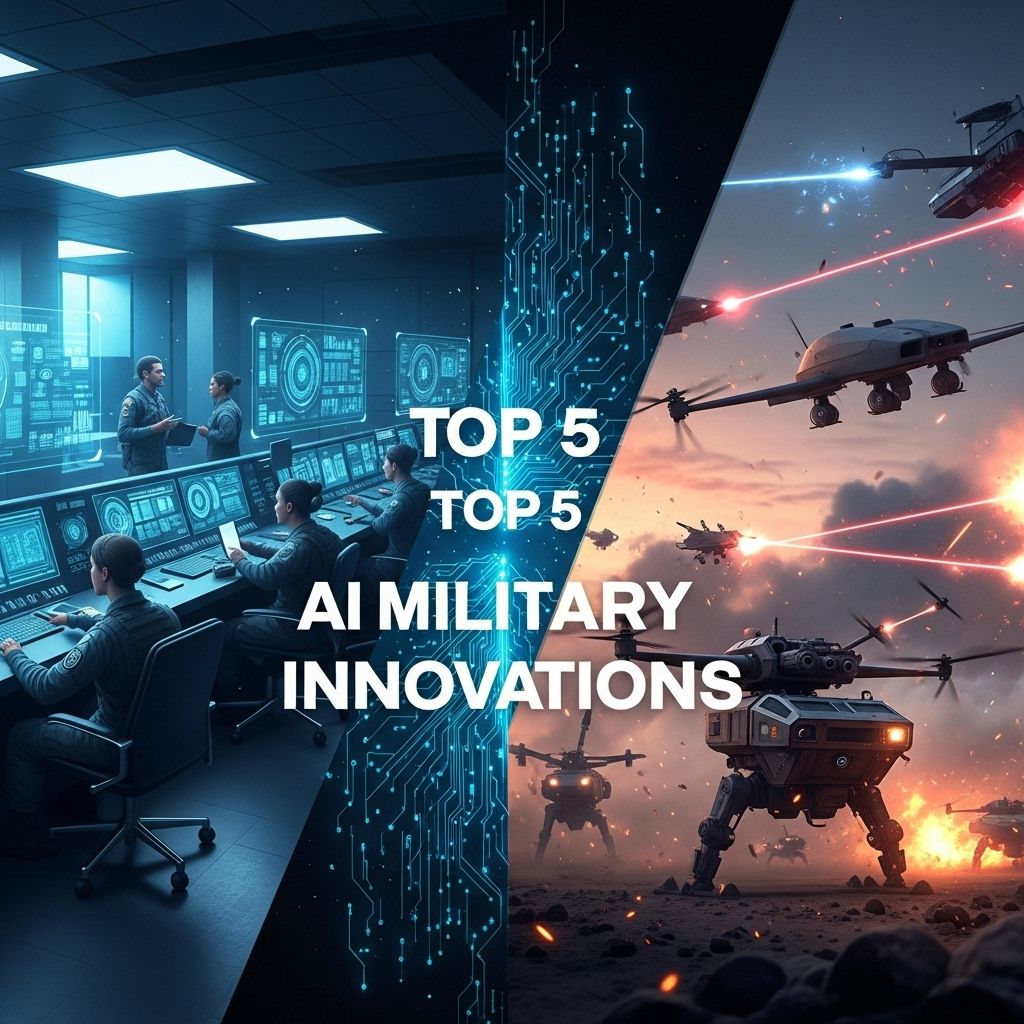

The military landscape is undergoing a significant transformation, spurred by advancements in artificial intelligence (AI) and machine learning. As modern warfare becomes increasingly complex, the need for real-time data processing and decision-making has become paramount. AI decision support systems are stepping in to enhance operational efficiency, improve situational awareness, and ultimately save lives. This article explores five innovative AI-driven military decision support systems that are reshaping defense strategies and tactics around the world.
1. Project Maven: Enhancing Intelligence Gathering
Project Maven, initiated by the U.S. Department of Defense (DoD), exemplifies how AI can analyze vast amounts of data collected from drones and other aerial platforms. This project aims to:
- Use machine learning algorithms to identify and classify objects in video footage
- Enhance the speed and accuracy of intelligence analysis
- Provide actionable insights to military analysts
By automating the processing of visual data, Project Maven allows military personnel to focus on strategic decision-making rather than sifting through hours of footage. The initial rollout has shown promising results, leading to discussions about expanding its capabilities.
Key Features
| Feature | Description |
|---|---|
| Data Processing | Automates the analysis of video data using AI algorithms. |
| Object Recognition | Identifies and classifies various military targets in real-time. |
| Actionable Insights | Provides military analysts with processed intelligence reports. |
2. AI-Powered Autonomous Vehicles
The development of autonomous vehicles in military operations is revolutionizing battlefield logistics and transportation. AI-powered systems can operate without direct human intervention, offering several advantages:
- Increased operational efficiency
- Reduced risk to human life
- Enhanced mission capabilities in denied environments
Companies like Boston Dynamics and Northrop Grumman are leading the way in creating robotic systems that can transport supplies, conduct reconnaissance, and even engage in combat scenarios. These vehicles are equipped with advanced sensors and AI algorithms to navigate complex terrains autonomously.
Advantages of Autonomous Vehicles
- Safety: Minimizes human casualties in dangerous operations.
- Cost Efficiency: Reduces the need for large numbers of personnel.
- 24/7 Operations: Capable of operating continuously without rest.
3. AI-Driven Predictive Analytics for Mission Planning
Predictive analytics is a game-changer in military strategy and mission planning. By utilizing historical data and real-time inputs, AI systems can forecast outcomes and recommend optimal actions. This technology can assist commanders in:
- Analyzing troop movements
- Evaluating environmental conditions
- Predicting enemy behavior
Systems such as the U.S. Army’s Integrated Visual Augmentation System (IVAS) leverage AI to enhance situational awareness by providing real-time data overlays and predictive insights, significantly improving decision-making timelines.
Implementation Challenges
While the potential of predictive analytics is immense, challenges remain:
- Data Quality: Ensuring accurate and reliable data inputs is crucial.
- Integration: Incorporating AI systems into existing military frameworks can be complex.
- Training: Personnel must be trained to interpret AI-generated insights effectively.
4. Enhanced Cyber Defense Systems
As cyber warfare becomes increasingly prevalent, AI-driven cyber defense systems are essential for protecting military networks from cyber threats. These systems use AI to detect anomalies, respond to intrusions, and prevent potential breaches. Key aspects include:
- Real-time threat detection
- Automated response mechanisms
- Continuous system monitoring
Organizations like the NSA are implementing AI algorithms to predict and identify cyber threats before they can cause damage. By analyzing patterns of behavior, these systems can distinguish between normal and suspicious activities, allowing for quicker responses to potential attacks.
Benefits of AI in Cyber Defense
| Benefit | Description |
|---|---|
| Proactive Measures | AI identifies threats before they escalate into crises. |
| Efficiency | Reduces the time taken to detect and respond to cyber threats. |
| Resource Allocation | Allows IT personnel to focus on strategic tasks rather than routine monitoring. |
5. Smart Decision Support Systems for Tactical Operations
Smart decision support systems amalgamate various AI technologies to assist in tactical planning and execution. These systems analyze data from multiple sources, including satellite imagery, troop movements, and intelligence reports, to provide comprehensive situational awareness. Benefits include:
- Improved coordination between units
- Enhanced strategic planning capabilities
- Faster response times in dynamic environments
One notable example is the U.S. Navy’s Aegis Combat System, which utilizes AI to assess threats and recommend defensive actions, ensuring that military ships are equipped to respond to various scenarios effectively.
Core Components of Smart Decision Support Systems
| Component | Functionality |
|---|---|
| Data Fusion | Integrates data from different sources for a unified view. |
| AI Algorithms | Processes data to derive insights and facilitate decision-making. |
| User Interface | Provides a user-friendly platform for military personnel. |
As the integration of AI in military operations continues to expand, it is clear that decision support systems will play a crucial role in shaping the future of warfare. The innovations highlighted above are just the tip of the iceberg, and as technology advances, we can expect even more sophisticated systems to emerge.
In conclusion, the military sector is at the forefront of AI innovation, leveraging these technologies to enhance decision-making capabilities and operational effectiveness. As we continue to explore the potential of AI in defense, understanding its implications and applications will be essential for maintaining a strategic edge in an ever-evolving global landscape.
FAQ
What are AI Decision Support Systems in the military?
AI Decision Support Systems in the military are advanced technological frameworks that leverage artificial intelligence to analyze data and assist military personnel in making informed and strategic decisions.
How do AI Decision Support Systems improve military operations?
These systems enhance military operations by providing real-time analysis, predictive modeling, and scenario simulation, allowing commanders to make quicker and more accurate decisions in complex environments.
What are some examples of AI Decision Support Systems used in the military?
Examples include automated logistics management systems, battlefield management systems, intelligence analysis tools, and predictive maintenance systems for military equipment.
What role does machine learning play in military AI Decision Support Systems?
Machine learning enables these systems to continuously improve their decision-making capabilities by learning from historical data and adapting to new information and patterns.
Are there ethical concerns related to AI Decision Support Systems in the military?
Yes, ethical concerns include the potential for bias in decision-making, accountability for autonomous actions, and the implications of using AI in warfare, necessitating strict guidelines and oversight.


