
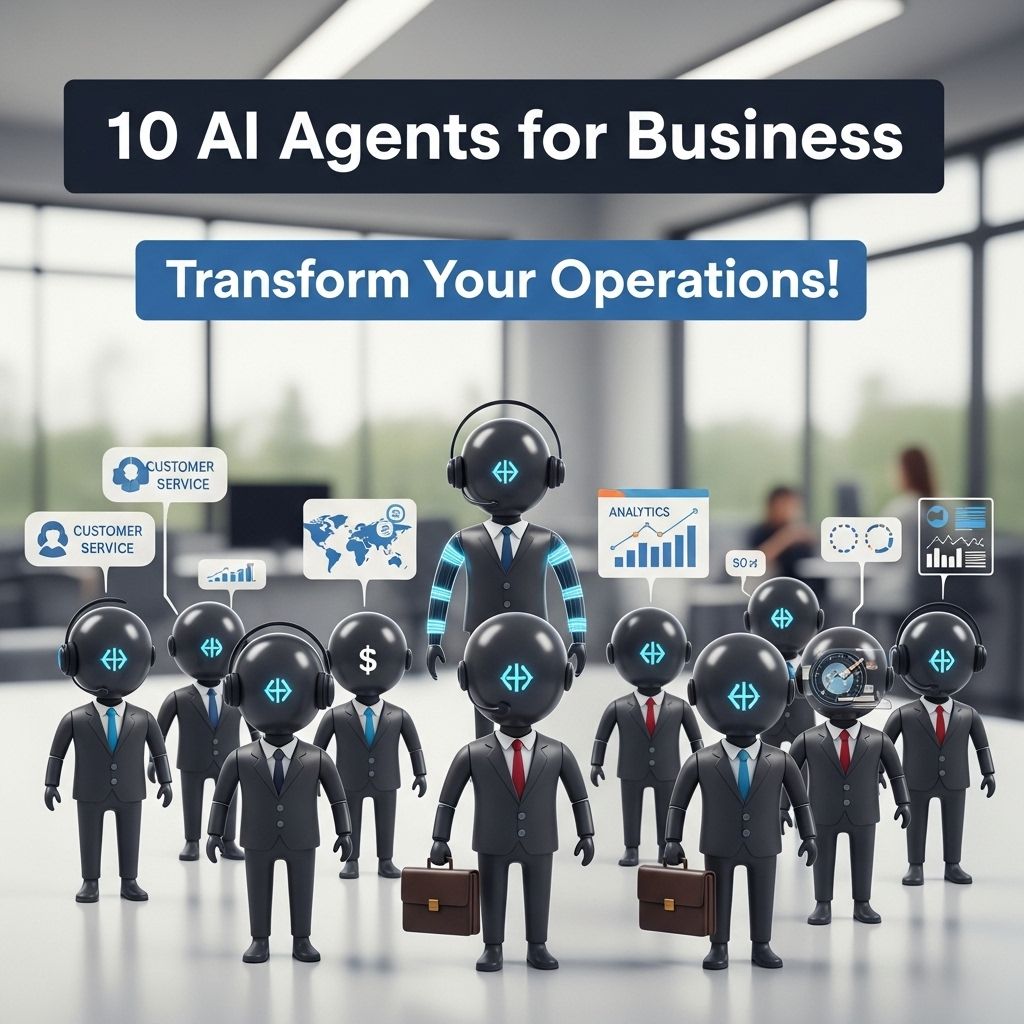

In today’s fast-paced business environment, leveraging artificial intelligence (AI) has become essential for driving efficiency and enhancing decision-making. AI agents are powerful tools that can automate tasks, analyze data, and provide insights that help businesses stay competitive. This article explores ten essential AI agents that can transform various business applications, allowing organizations to operate smarter and more effectively.
1. Chatbots for Customer Support
Chatbots are AI-powered agents designed to interact with customers via text or voice. They can handle inquiries, provide support, and assist with transactions without human intervention.
Benefits:
- 24/7 availability for customer inquiries
- Instant responses to frequently asked questions
- Reduced workload for customer service teams
2. Virtual Assistants for Task Management
AI-driven virtual assistants, like Google Assistant or Microsoft Cortana, help manage tasks, schedule meetings, and organize workflows, thereby increasing personal productivity.
Key Features:
- Voice recognition for hands-free operation
- Integration with calendars and email applications
- Smart reminders and notifications
3. Predictive Analytics Platforms
Predictive analytics uses AI algorithms to analyze historical data and forecast future trends. Businesses use these platforms to optimize marketing strategies, inventory management, and resource allocation.
Best Practices:
| Strategy | Description |
|---|---|
| Data Collection | Gather relevant historical data from multiple sources. |
| Model Selection | Choose the right AI model based on the problem. |
| Continuous Improvement | Regularly update models with new data for accuracy. |
4. AI-Powered CRM Systems
Customer Relationship Management (CRM) systems enhanced with AI can analyze customer interactions, predict customer behavior, and suggest actions to improve sales outcomes.
Features to Look For:
- Lead scoring to prioritize high-value prospects
- Automated follow-up reminders
- Sentiment analysis on customer communications
5. Automated Financial Advisors
RoBo-advisors are AI tools that manage investment portfolios by analyzing market data and personal financial goals, offering low-cost investment management.
Advantages:
- Reduced fees compared to traditional financial advisors
- Personalized investment strategies
- Accessibility for small investors
6. AI-Driven Supply Chain Management
AI agents in supply chain management help optimize inventory levels, forecast demand, and improve logistics efficiency, resulting in cost savings and enhanced service delivery.
Critical Applications:
- Inventory optimization based on real-time data
- Dynamic pricing strategies
- Risk assessment for supply disruptions
7. Personalized Marketing Automation Tools
AI marketing tools can analyze customer behavior and preferences to create personalized marketing campaigns, improving engagement and conversion rates.
Marketing Techniques:
| Technique | Description |
|---|---|
| Segmentation | Divide the customer base into target groups based on data. |
| Content Personalization | Tailor messages and offers to individual preferences. |
| Behavioral Targeting | Analyze user behavior to improve ad targeting. |
8. Document Automation Solutions
AI agents can automate the creation and management of documents, such as contracts and invoices, by extracting data from various sources and ensuring compliance with legal standards.
Key Features:
- Natural Language Processing for understanding context
- Templates for standardized document creation
- Version control and audit trails
9. Human Resource Management Systems
AI-enabled HR systems streamline processes such as recruitment, onboarding, and employee performance analysis, enhancing the overall HR function.
Applications in HR:
- Automated resume screening
- Employee analytics for retention strategies
- Skills matching for job placements
10. Intelligent Cybersecurity Solutions
AI technologies are increasingly employed in cybersecurity to detect and respond to threats in real-time, improving an organization’s security posture.
Key Techniques:
- Behavioral analysis to identify anomalies
- Automated threat detection and response
- Phishing detection algorithms
Conclusion
Integrating AI agents into business operations can significantly enhance efficiency, accuracy, and decision-making capabilities. By leveraging these technologies, organizations can better meet the demands of their customers and stay ahead in a competitive landscape. Whether it’s automating customer support with chatbots or using predictive analytics to inform strategy, the potential applications of AI agents are vast and transformative.
FAQ
What are AI agents for business applications?
AI agents for business applications are software programs that use artificial intelligence to perform tasks, automate processes, and improve decision-making in various business scenarios.
How can AI agents improve business efficiency?
AI agents can streamline operations by automating repetitive tasks, providing data analysis, and enhancing customer interactions, leading to increased productivity and reduced operational costs.
What industries can benefit from AI agents?
AI agents can benefit numerous industries including finance, healthcare, retail, manufacturing, and customer service by optimizing processes and enhancing service delivery.
Are AI agents easy to integrate into existing systems?
Many AI agents are designed to be easily integrated with existing business systems and software, allowing for seamless implementation and minimal disruption to operations.
What are some examples of AI agents used in business?
Examples of AI agents include chatbots for customer service, predictive analytics tools for marketing, virtual assistants for scheduling, and automated financial analysis tools.
How do I choose the right AI agent for my business?
To choose the right AI agent for your business, assess your specific needs, evaluate different solutions, consider ease of integration, and look for vendors with strong support and user feedback.


