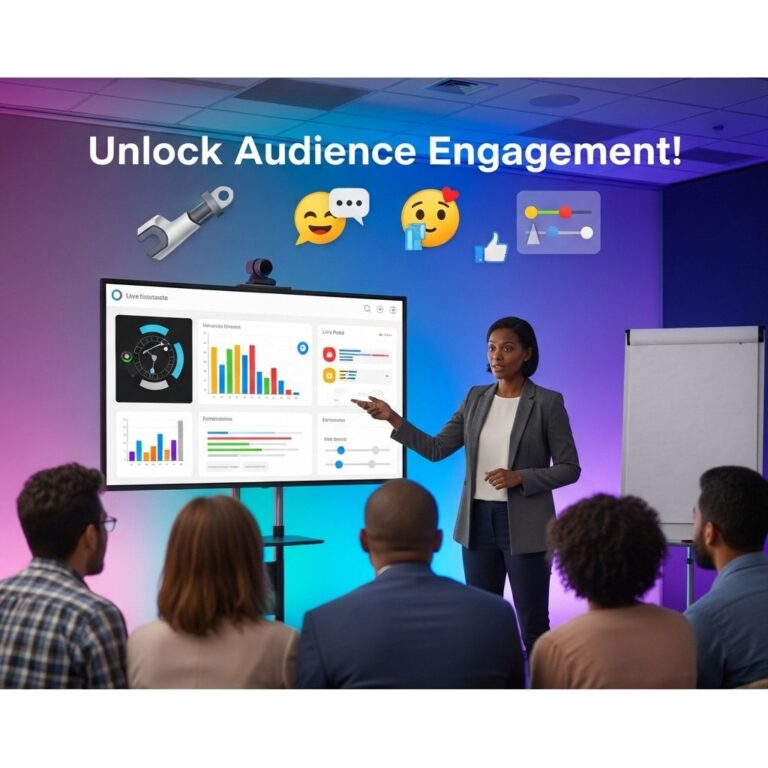

In today’s fast-paced digital world, capturing and retaining an audience’s attention during presentations is more challenging than ever. As technology continues to evolve, so do the tools that enable presenters to enhance audience engagement. Leveraging these tools can transform a standard presentation into an interactive and memorable experience. This article explores various audience engagement tools, their benefits, and practical applications to maximize your impact.
Understanding Audience Engagement
Audience engagement is the process of actively involving the audience in the presentation. When participants are engaged, they are more likely to absorb information, retain it, and apply it in real-world situations. Engaged audiences contribute to a more dynamic and effective presentation, ultimately leading to better outcomes.
Why Engagement Matters
- Retention: Engaged audiences retain information better, leading to improved understanding.
- Feedback: Active participation encourages immediate feedback, allowing for real-time adjustments.
- Connection: Engagement fosters a deeper connection between the presenter and the audience.
Types of Audience Engagement Tools
A variety of tools are available to enhance audience engagement, ranging from simple interactive elements to complex software solutions. Here are some categories to consider:
1. Interactive Presentation Tools
These tools allow presenters to create visually appealing and interactive presentations that capture attention.
Popular Tools:
- Prezi: Offers a zoomable canvas, enabling non-linear presentations.
- Canva: Provides a user-friendly interface for designing presentations with various templates.
- Visme: Combines presentations with infographics to visualize data effectively.
2. Audience Response Systems
These systems facilitate real-time feedback and interaction from the audience during the presentation.
Noteworthy Platforms:
- Kahoot: A game-based learning platform that makes quizzes engaging.
- Slido: Allows participants to ask questions and vote on topics in real time.
- Pigeonhole Live: Encourages audience Q&A and polling in a seamless manner.
3. Social Media Integration
Utilizing social media can enhance audience participation before, during, and after the presentation.
Strategies:
- Live Tweeting: Share key points and insights in real-time on Twitter.
- Hashtags: Create a unique hashtag for attendees to share their thoughts.
- Instagram Stories: Capture and share moments during the presentation.
Implementing Audience Engagement Tools
Successfully integrating these tools into your presentation requires planning and execution. Here’s a step-by-step approach:
Step 1: Define Your Objectives
What do you want to achieve? Clearly outline your goals for audience engagement.
Step 2: Choose the Right Tools
Select tools that align with your objectives and the audience’s preferences. Consider:
- The technical proficiency of the audience.
- The context of the presentation.
- The type of content being presented.
Step 3: Prepare and Test Your Tools
Test your selected tools ahead of time to avoid technical issues during the presentation.
Step 4: Foster Interaction
Encourage audience participation by prompting questions, using polls, and integrating multimedia elements.
Step 5: Gather Feedback
Post-presentation surveys can provide insight into audience engagement and areas for improvement.
Best Practices for Using Engagement Tools
To maximize the effectiveness of audience engagement tools, adhere to the following best practices:
- Keep it Simple: Ensure tools are user-friendly and accessible to all audience members.
- Be Authentic: Interact genuinely with your audience; it builds trust and rapport.
- Stay Relevant: Use tools that enhance your content rather than distract from it.
- Encourage Inclusivity: Design activities that invite all audience members to participate.
- Follow Up: Maintain engagement after the presentation through follow-up emails, sharing resources, and inviting feedback.
Case Studies of Effective Engagement
Examining real-world examples of successful audience engagement can provide valuable insights.
Case Study 1: Tech Conference Presentation
A technology leader utilized Slido during a conference presentation, allowing attendees to submit questions throughout the session. This resulted in a more dynamic discussion, as the presenter addressed real-time concerns and interests.
Case Study 2: Educational Workshop
A workshop facilitator employed Kahoot to conduct a quiz after each section of the presentation. This not only increased retention but also made learning enjoyable, with participants competing for scores in a fun manner.
Conclusion
Incorporating audience engagement tools into presentations is not just a trend; it is a necessity in our increasingly connected world. By understanding the importance of engagement and utilizing the right tools, presenters can create powerful experiences that resonate with their audiences. Remember, the key to a memorable presentation lies in the interaction and connection you foster with your audience. So, take advantage of technology, adapt your approaches, and maximize your impact.
FAQ
What are audience engagement tools for presentations?
Audience engagement tools are interactive technologies and platforms used during presentations to enhance audience participation, feedback, and overall experience.
How can audience engagement tools improve my presentation?
They can foster increased interaction, gather real-time feedback, and ensure that the audience is more invested in the content being presented.
Which audience engagement tools are the most effective?
Some of the most effective tools include live polling apps, Q&A platforms, audience response systems, and interactive presentation software.
Can audience engagement tools be used for virtual presentations?
Yes, many audience engagement tools are designed specifically for virtual settings, allowing presenters to connect with remote audiences seamlessly.
How do I choose the right audience engagement tool for my presentation?
Consider factors such as the size of your audience, the format of your presentation, and the specific types of engagement you wish to achieve when selecting a tool.
Are there any best practices for using audience engagement tools?
Yes, best practices include preparing your audience in advance, integrating tools seamlessly into your presentation, and encouraging participation through clear instructions.