
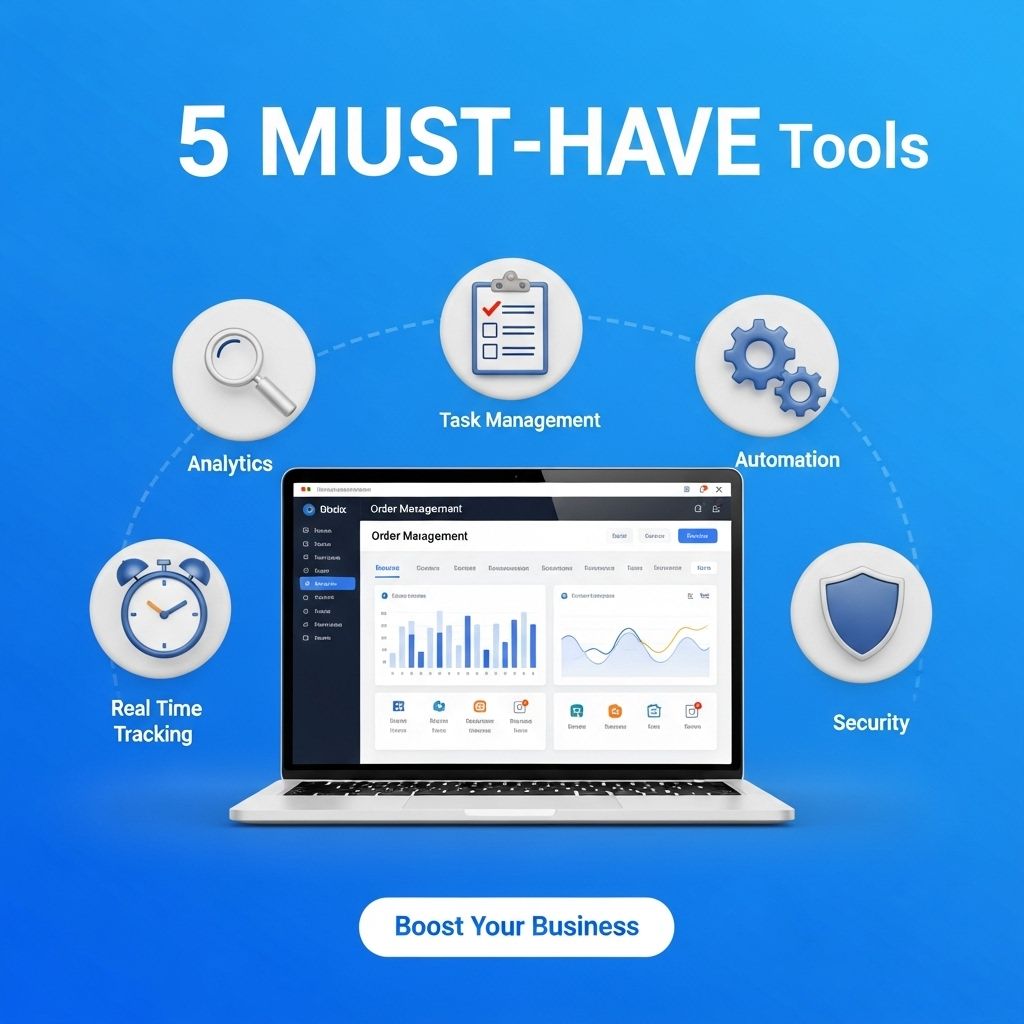

In today’s fast-paced e-commerce landscape, businesses of all sizes are constantly seeking ways to enhance their order fulfillment processes. One of the key components to achieving operational efficiency is a robust order management system (OMS). With countless options available, selecting the right tools can be challenging. This article delves into five essential tools that every order management software should incorporate to streamline operations, improve customer satisfaction, and drive business growth.
1. Inventory Management System
Effective inventory management is crucial for any business that handles physical products. An integrated inventory management system helps businesses keep track of stock levels, manage reordering processes, and minimize excess inventory. Here’s why it’s a must-have:
Benefits of Inventory Management
- Real-Time Tracking: Monitor stock levels in real-time to avoid stockouts and overstock situations.
- Automated Reordering: Set thresholds for automatic reordering when stock reaches a certain level.
- Accurate Forecasting: Use historical data to predict future inventory needs and adjust purchasing accordingly.
2. Customer Relationship Management (CRM) Integration
Integrating CRM capabilities with your order management software allows businesses to manage customer interactions seamlessly. A well-connected CRM helps in understanding customer preferences and improving personalized service. Here’s how CRM integration can enhance your order management:
Key Features of CRM Integration
- Comprehensive Customer Profiles: Access detailed customer information, including order history and preferences.
- Enhanced Communication: Automate communication through email marketing campaigns or notifications about order status.
- Customer Feedback Loop: Quickly adapt to customer feedback and improve service delivery.
3. Shipping Management Capability
A sophisticated shipping management tool within your order management software can significantly reduce shipping times and costs. As logistics play a pivotal role in e-commerce success, this feature should not be overlooked. Here’s what to consider:
Shipping Management Features
| Feature | Description |
|---|---|
| Multi-Carrier Support | Integrate with multiple shipping providers to find the best rates and options. |
| Label Printing | Automatically generate shipping labels for ease and accuracy. |
| Tracking Capabilities | Provide customers with real-time tracking information for their orders. |
4. Analytics and Reporting Tools
Data-driven decision-making is fundamental for success in order management. Built-in analytics and reporting tools allow businesses to gather insights about sales trends, customer behavior, and operational efficiency. Here’s why analytics should be part of your OMS:
Advantages of Analytics Tools
- Performance Metrics: Track key performance indicators (KPIs) such as order fulfillment rates, average delivery times, and customer satisfaction scores.
- Sales Trends: Identify patterns in sales data to inform inventory purchases and marketing strategies.
- Operational Efficiency: Analyze workflows to pinpoint bottlenecks and improve processes.
5. Payment Processing Solutions
A reliable payment processing solution is essential for any order management software. It not only ensures secure transactions but also enhances the overall customer experience. Here are the key aspects to consider:
Features of Payment Processing Solutions
- Multiple Payment Options: Support for credit cards, PayPal, digital wallets, and other payment methods to cater to diverse customer preferences.
- Fraud Protection: Implement advanced security measures to protect against fraud and data breaches.
- Seamless Checkout Experience: Ensure a user-friendly checkout process to minimize cart abandonment rates.
Conclusion
In conclusion, investing in an order management system equipped with these five essential tools can drastically improve a business’s operational efficiency, enhance customer satisfaction, and empower growth. As e-commerce continues to evolve, staying ahead of the competition means utilizing the best tools available to streamline processes and meet customer expectations. Whether you are a small business or a large enterprise, these systems and integrations will position you for success in the dynamic world of order management.
FAQ
What are the essential features of order management software?
Key features include order tracking, inventory management, customer relationship management, reporting and analytics, and integration capabilities with e-commerce platforms.
How does order management software improve efficiency?
It streamlines the order processing workflow, reduces manual errors, automates routine tasks, and enhances communication between departments, thus improving overall efficiency.
Can order management software integrate with existing systems?
Yes, most order management software solutions offer integration options with existing systems such as ERP, CRM, and e-commerce platforms to ensure seamless operations.
What should I look for in order management software?
Look for user-friendly interfaces, scalability, customization options, real-time tracking features, and strong customer support.
Is order management software suitable for small businesses?
Absolutely! Many order management software solutions are designed to cater to businesses of all sizes, including small enterprises, to help them manage orders effectively.
How can order management software enhance customer satisfaction?
By providing accurate order tracking, timely updates, and efficient handling of returns and exchanges, order management software significantly enhances the overall customer experience.


