
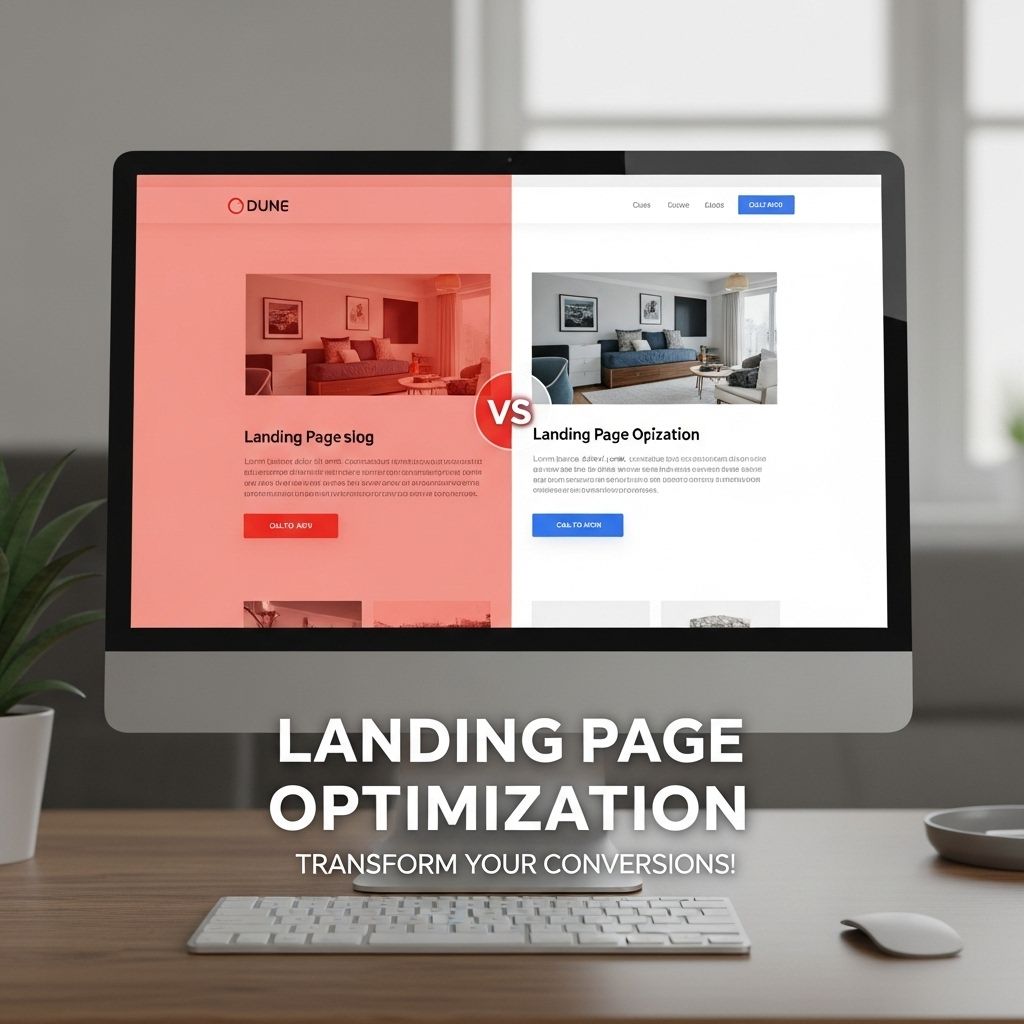

In the world of digital marketing, the importance of landing pages cannot be overstated. They serve as the first point of contact for potential customers and play a crucial role in converting visitors into leads or sales. However, not all landing pages are created equal. This is where landing page optimisation comes into play. By fine-tuning these pages, marketers can significantly improve their performance and enhance user experience.
Understanding Landing Pages
A landing page is a standalone web page, distinct from your main website, that is designed specifically for a marketing or advertising campaign. Its purpose is to direct the visitor to take action, whether that be making a purchase, signing up for a newsletter, or downloading an ebook. The design and content of a landing page are tailored to a specific audience segment, making it critical to get the details right.
Key Characteristics of Effective Landing Pages
- Focused Content: Every element on the page should support the primary goal.
- Clear Call-to-Action (CTA): The CTA must stand out and clearly convey what the user should do next.
- Minimal Distractions: Remove unnecessary links or information that could divert attention.
- A/B Testing: Regularly test variations of your landing page to see what works best.
The Importance of Optimisation
Landing page optimisation involves improving various elements of the page to enhance its effectiveness. This can lead to higher conversion rates, which ultimately translates to increased revenue. Here are several reasons why landing page optimisation is critical:
1. Improved Conversion Rates
The primary goal of a landing page is to convert visitors. If the page is not optimised, visitors may leave without taking action. By continually testing and improving elements such as headlines, forms, and visuals, marketers can achieve higher conversion rates.
2. Enhanced User Experience
A well-optimised landing page provides a seamless experience for visitors. This includes fast loading times, mobile responsiveness, and intuitive navigation. A positive user experience can significantly impact a visitor’s decision to convert.
3. Better Return on Investment (ROI)
When landing pages convert better, the cost per acquisition (CPA) decreases, leading to a higher ROI on marketing efforts. This allows businesses to allocate resources more effectively and increase overall profitability.
4. Increased Brand Credibility
Professional, well-designed landing pages enhance brand credibility. When visitors feel confident in the quality of your landing page, they are more likely to trust your business and proceed with the desired action.
Elements of Landing Page Optimisation
Optimising a landing page requires a strategic approach. Here are the essential elements to consider:
A. Headline and Subheadline
The headline is the first thing visitors see. It should be clear, compelling, and relevant to the content of the ad that brought them there. The subheadline can provide additional context or encourage the visitor to keep reading.
B. Visual Content
Visuals play a critical role in landing page performance. Consider using:
- High-quality images or videos that represent the product or service.
- Infographics to explain complex information more clearly.
- Icons to break up text and guide the user’s eye.
C. Call-to-Action
Your CTA should be prominent and persuasive. Here are some tips for an effective CTA:
- Use action-oriented language (e.g., ‘Get Started’, ‘Sign Up Now’).
- Place it above the fold to capture immediate attention.
- Consider using contrasting colours to make it stand out.
D. Form Design
If your landing page collects user information, the form design is crucial. Keep it simple:
- Limit the number of fields to the essentials.
- Label fields clearly and use placeholder text for guidance.
- Consider using multi-step forms to reduce friction.
E. Social Proof
Incorporating testimonials, reviews, or case studies helps to build trust. Displaying endorsements from satisfied customers can greatly influence decision-making.
Best Practices for Landing Page Optimisation
To enhance the effectiveness of your landing page, follow these best practices:
| Practice | Description |
|---|---|
| Use Analytics Tools | Utilise tools like Google Analytics to track performance and user behaviour. |
| Mobile Optimisation | Ensure your landing page is fully responsive for mobile devices. |
| A/B Testing | Regularly test different elements to identify the most effective versions. |
| Speed Optimisation | Minimise loading times to keep visitors engaged. |
| Clear Messaging | Ensure consistency between the ad and landing page messaging. |
Conclusion
Landing page optimisation is not just a one-time task; it requires ongoing analysis and adjustment. By focusing on the elements discussed, businesses can enhance the performance of their landing pages, resulting in higher conversion rates, improved user experiences, and ultimately greater success in digital marketing campaigns. Embrace optimisation as a continual process, and you’ll likely see your marketing efforts yield significant returns.
FAQ
What is landing page optimization?
Landing page optimization is the process of improving a web page’s ability to convert visitors into leads or customers by enhancing its design, content, and user experience.
Why is landing page optimization important?
Landing page optimization is crucial because it directly impacts conversion rates, helping businesses maximize their return on investment from advertising and marketing efforts.
How can I optimize my landing page for better conversions?
To optimize your landing page, focus on clear messaging, compelling calls to action, fast loading times, mobile responsiveness, and A/B testing to identify what works best.
What elements should be included in a high-converting landing page?
Key elements of a high-converting landing page include a strong headline, engaging visuals, concise copy, social proof, and a prominent call-to-action.
How does A/B testing relate to landing page optimization?
A/B testing is a method used in landing page optimization to compare two versions of a page to see which one performs better in terms of conversions.
What role does SEO play in landing page optimization?
SEO plays a significant role in landing page optimization by ensuring the page ranks well in search engines, driving organic traffic, and increasing visibility to potential customers.


