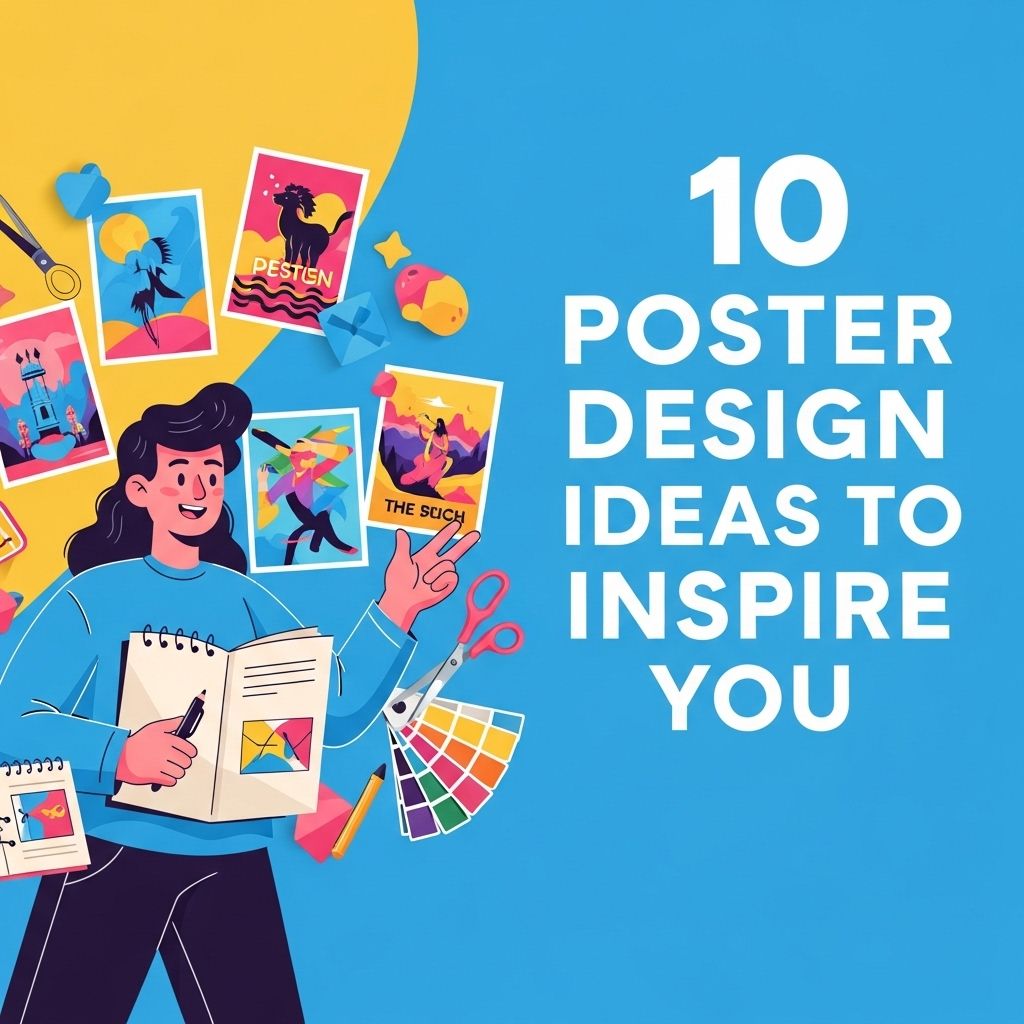

In a world saturated with visual content, design plays a crucial role in grabbing attention and conveying messages effectively. Whether it’s for an event, a product launch, or simply artistic expression, a well-crafted poster can leave a lasting impression. Let’s explore innovative poster design ideas that can spark your creativity and elevate your design projects.
1. Minimalist Aesthetics
Less is often more in design. Minimalist posters utilize whitespace and a limited color palette to create powerful messages. Here’s how to achieve this:
- Focus on Typography: Use a bold typeface to make your message clear.
- Limit Colors: Stick to 2-3 complementary colors.
- Embrace Whitespace: Allow your design to breathe by keeping elements spaced apart.
Example
Imagine a poster for a coffee shop featuring a large coffee cup silhouette in the center, with the shop name boldly displayed above it.
2. Vintage Charm
Vintage designs evoke nostalgia and can create a strong emotional connection. Here’s how to incorporate vintage elements:
- Retro Fonts: Choose typefaces that reflect the era you’re drawing inspiration from.
- Color Tones: Use muted colors or sepia tones to enhance the vintage feel.
- Illustrations: Hand-drawn elements can add to the authenticity.
Tips for Implementation
Use textures to mimic age, such as paper grain or distressed effects.
3. Bold Typography
Typography can be a visual centerpiece. Here’s how to make it stand out:
- Use Large Fonts: Make sure your key message is the focal point.
- Experiment with Layout: Arrange text in creative ways, such as circular or diagonal alignments.
- Combine Styles: Mix serif and sans-serif fonts for contrast.
Showcase
A music concert poster with the artist’s name in huge, expressive letters can create excitement and anticipation.
4. Geometric Patterns
Using shapes and patterns can add a dynamic element to your poster:
| Shape | Effect |
|---|---|
| Triangles | Direction and movement |
| Circles | Unity and harmony |
| Squares | Stability and professionalism |
Design Tip
Layer different shapes to create depth and interest.
5. Illustrative Art
Custom illustrations can make your poster unique. Consider the following:
- Hand-drawn Elements: These can add a personal touch.
- Character Design: Create mascots or characters that represent your brand.
- Scene Creation: Illustrations can depict a full story or theme.
Case Study
A charity event poster could feature an illustrated community scene highlighting the cause.
6. Photography Focus
Using striking images can communicate powerful messages. Here’s how to use photography effectively:
- Select High-Quality Images: Ensure your images are clear and relevant.
- Overlay Text: Use contrasting colors to make text readable over images.
- Consider Composition: The focal point of your image should align with your message.
Inspiration
An environmental awareness poster could feature a stunning landscape photograph with a call-to-action overlay.
7. Interactive Posters
Leverage technology to create engaging experiences:
- QR Codes: Link to additional information or experiences.
- Augmented Reality: Use AR to bring static images to life.
- Scratch-Off Elements: Create an element of surprise.
Implementation Strategy
Ensure the interactive elements are user-friendly and enhance the overall design.
8. Color Blocking
Color blocking can create a vibrant and modern look. Here’s how to effectively use this technique:
- Choose Complementary Colors: Pick colors that work well together.
- Create Sections: Use blocks of color to segment information.
- Balance Warm and Cool Tones: This can help maintain visual harmony.
Example Usage
A science fair poster could use color blocks to highlight different projects or categories.
9. 3D Effects
Adding depth can make your poster more visually appealing:
- Shadowing: Use shadows to create a sense of dimension.
- Layering Elements: Overlap shapes and images for a 3D feel.
- Typography Depth: Experiment with font styles that give a raised effect.
Visual Example
A movie poster could use 3D elements to make character images pop out.
10. Eco-Friendly Designs
As sustainability becomes increasingly important, eco-friendly poster designs are gaining popularity. Here’s how:
- Use Recycled Materials: Print on recycled paper.
- Digital Alternatives: Promote digital posters for online sharing.
- Natural Color Palettes: Use earth tones to reflect your commitment to the environment.
Future Considerations
As awareness grows, eco-friendly designs can resonate more with audiences looking for sustainable options.
Each of these ideas offers a unique way to approach poster design. By combining different elements and techniques, you can create a compelling visual narrative that resonates with your audience. Keep experimenting, and don’t hesitate to draw inspiration from various sources. The world of design is vast and full of possibilities!
FAQ
What are some popular poster design ideas?
Some popular poster design ideas include minimalist designs, vintage aesthetics, typography-focused layouts, illustrated graphics, photo collages, and nature-inspired themes.
How can I choose the right colors for my poster design?
Choosing the right colors involves understanding color theory, considering the emotions you want to evoke, and ensuring good contrast for readability.
What tools can I use to create poster designs?
You can use graphic design software like Adobe Illustrator, Canva, or Photoshop, as well as online platforms that offer templates and user-friendly interfaces.
What elements are essential in a poster design?
Essential elements in a poster design include a clear focal point, balanced composition, appropriate typography, and an eye-catching color scheme.
How do I make my poster stand out?
To make your poster stand out, use bold visuals, unique typography, a compelling message, and consider unconventional layouts or shapes.
What is the importance of white space in poster design?
White space is crucial in poster design as it helps to improve readability, focuses attention on key elements, and creates a more aesthetically pleasing layout.