
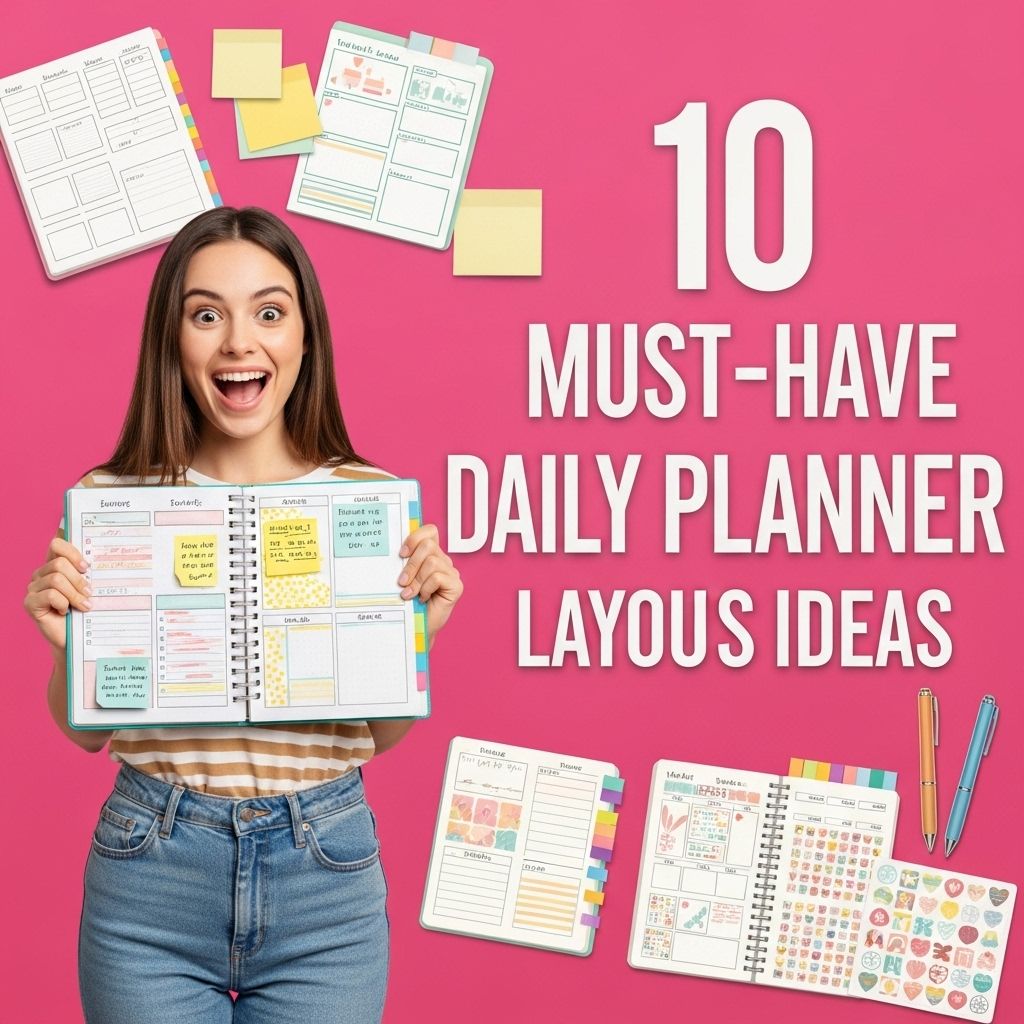

In today’s fast-paced world, staying organized is essential for productivity and peace of mind. A daily planner serves as a crucial tool in managing tasks, appointments, and personal goals. Whether you prefer digital solutions or traditional pen-and-paper methods, customizing your daily planner layout can enhance your planning experience significantly. Here are ten must-have layout ideas that can transform your planning routine into a more effective and enjoyable process.
1. The Classic Daily Schedule
This layout offers a straightforward approach to planning your day. Divided into hourly segments, it allows you to allocate specific tasks or appointments to each hour of the day.
Benefits:
- Clear time management
- Easy to visualize your day
- Reduces the risk of overcommitting
Example Format:
| Time | Task |
|---|---|
| 8:00 AM | Morning Meeting |
| 9:00 AM | Project Work |
| 12:00 PM | Lunch Break |
| 1:00 PM | Client Call |
| 3:00 PM | Review Session |
2. The Bullet Journal Method
The bullet journal system is a customizable and forgiving organization system that can adapt to your personal planning needs. It consists of various symbols to track tasks, events, and notes, making it a unique and interactive experience.
Key Elements:
- Index: A table of contents for easy navigation.
- Future Log: A yearly overview for long-term planning.
- Monthly Log: A snapshot of tasks and events for the month.
- Daily Log: A daily record of tasks, events, and notes.
3. Time Blocking
This technique involves dividing your day into blocks of time dedicated to specific tasks. Each block can be used for focused work, meetings, or breaks, promoting productivity by limiting distractions.
How to Implement:
- Identify your most important tasks.
- Allocate time blocks for each task.
- Use color coding to visually differentiate types of tasks.
4. The Task List with Priority Levels
Not all tasks are equally important. This layout involves categorizing tasks based on their urgency and importance, allowing you to focus on what truly matters each day.
Priority Levels:
- High Priority: Must be completed today.
- Medium Priority: Should be completed soon.
- Low Priority: Can be postponed.
5. The Gratitude Log
Incorporating a gratitude log into your daily planner can boost your mental well-being. This section allows you to reflect on positive experiences or things you are thankful for each day.
Example Entries:
- Today I am grateful for…
- Someone who made me smile today…
- An achievement, no matter how small…
6. The Weekly Overview
Having a weekly overview provides a larger perspective on your tasks and commitments. This layout typically includes space for each day of the week, allowing you to plan ahead.
Components:
- Weekly goals
- Important deadlines
- Appointments
7. The Health and Wellness Tracker
Integrating health and wellness into your daily planner can help you stay committed to self-care. This section can include tracking nutrition, exercise, and mental health.
Tracking Ideas:
| Aspect | Tracking Method |
|---|---|
| Water Intake | Daily log |
| Exercise | Activity checklist |
| Mood | Daily rating |
8. The Monthly Goals Planner
Setting monthly goals is essential for long-term success. This layout allows you to outline what you want to achieve by the end of the month.
Steps to Create:
- Define specific objectives.
- Break down goals into actionable steps.
- Review progress each week.
9. The Mind Map
A mind map can be a great visual aid in your planner for brainstorming ideas or projects. It allows you to graphically explore connections between different tasks or themes.
How to Use:
- Start with a central theme.
- Branch out with related ideas.
- Use colors and images to enhance creativity.
10. The Reflection Section
At the end of each day or week, set aside time for reflection. This section of your planner can help you assess what worked well, what didn’t, and how to improve in the future.
Reflection Prompts:
- What was my biggest accomplishment this week?
- What challenges did I face?
- What can I change for better productivity?
With these ten must-have daily planner layouts, you can take your organization and productivity to the next level. Experiment with different styles to find what resonates most with you, and remember that the best layout is one that suits your individual needs and preferences.
FAQ
What are the benefits of using a daily planner?
Using a daily planner helps improve time management, increase productivity, and reduce stress by keeping your tasks and appointments organized.
What should I include in my daily planner layout?
A daily planner layout should include sections for appointments, to-do lists, priorities, goals, and notes to ensure all aspects of your day are covered.
How can I customize my daily planner layout?
You can customize your daily planner layout by adding stickers, color-coding sections, using different formats like hourly or block schedules, and including inspirational quotes.
What are some popular daily planner layouts?
Popular daily planner layouts include time-blocking, bullet journaling, hourly schedules, and minimalist designs, each catering to different planning preferences.
How do I choose the right daily planner for my needs?
Consider your daily tasks, preferred layout style, and whether you prefer digital or physical planners to choose the one that best fits your needs.
Can a daily planner help with goal setting?
Yes, a daily planner can aid in goal setting by allowing you to break down larger goals into manageable tasks and track your progress each day.


